



Marketing
The White Bunny
How the small things make the biggest difference in life, love, and business, plus why microcopy is actually a big thing.
T.S Eliot said: “when forced to work within a strict framework, the imagination is taxed to its utmost — and will produce its richest ideas”. We agree. This is our rant about how the power of constraints can help, not hinder, your strategy.
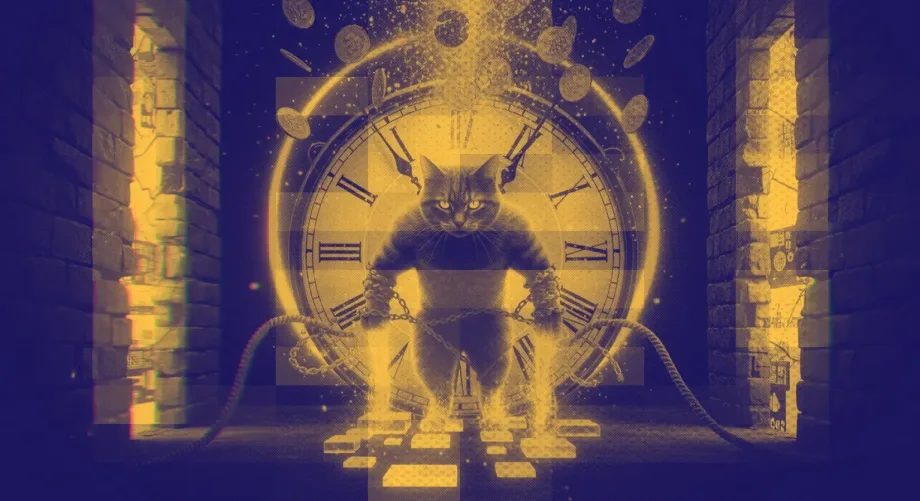
In February 1963, four noobs gathered to record their debut studio album. The production budget was barely four hundred pounds. They had one day – thirteen hours, to be more precise– to work through fourteen songs, seven on each side of a shiny new vinyl LP.
Shortly after 10pm, the producers told them they had only fifteen minutes left to do the last song. They were exhausted. The singer was sick and with a sore throat, on the edge of losing his voice. One take was all he had left in him.
The band was The Beatles, the song was “Twist & Shout”, and it took the world by storm.
We’ll never know what kind of record would have resulted from a more expensive and lengthy recording process. But we know for sure that the constraints improved the outcome. Lennon’s voice sounds particularly gritty in that track. Play it, you’ll hear him giving it all. It makes you want to jump off your chair, shake your head and sing it at the top of your voice. The challenging time and conditions turned out to be propellers for success. Twist & Shout was an instant hit across the ocean and kickstarted Beatlemania. Sixty years later, it’s still going strong, with nearly 400M streams on Spotify. It’s not the only example of happy accidents, spontaneous creation and unexpected success in rock & roll history.
In July 1981, David Bowie found out that Queen were jamming next to him at the studio, so he interrupted their session and dared them to write a song together. The unlikely combination of Bowie and Mercury’s larger than life personalities resulted in a quirky, brilliant song, recorded on the fly, that makes you fear it won’t work, but then it does, and that remains powerful, poignant and unique decades later. Sabbath owes their sound to Tony Iommi’s accident. Losing his fingers forced him to play with looser strings, resulting in a darker, moodier and lower guitar tone that nobody else had. In the 80s, New Order changed the music scene, forced to innovate after the tragic loss of their irreplaceable frontman.
There are plenty of inspiring stories about people thriving in spite of their constraints. The ones that are truly spectacular are those that thrived because of their constraints.
I chose this dad rock intro because music, and particularly (and historically) rock music challenges the status quo. It rebels against the odds and expectations. It seeks uniqueness. There’s a lesson for business strategy there: Finding the way around your company’s limitations – real, imaginary, economic, time-based, market-based, social or otherwise – helps a company evolve. This reinforces focus, differentiation, originality, lateral thinking, and pragmatism.
Developing a habit to analyze, reverse and face these boundaries can help you move from stagnation to motion, and from motion to success.
— Santi
Leveraging constraints is a key strategy – possibly the key strategic element – for growing small and mid-market companies. When you’re big enough, you are somewhat more able to create your reality, which only clashes against the realities of others as big as you. But when you’re fighting to grow and position, constraints are everywhere. You have to adapt, and use the company’s limitations in creative and unexpected ways that work in your favor.
This is a potentially endless subject, so let’s narrow it down to a few common constraints you can circumvent for some operational and competitive edge.
Parkinson’s Law states that work will expand itself until it fits all the time available. Limiting the maximum time devoted to something – and being strict about it – can work wonders. It’s easier to be pragmatic, prioritize, decide, and ship good stuff when you’re running out of time and don’t have time to second-guess anything.
Anytime you face a new project or challenge, consider a “minimum viable everything” approach. What are the absolute essentials I need to keep? How can I get rid of all the noise, bells, whistles and whatnot so I can reach my very tight deadline?
Back in 2013, when Mailchimp started developing a name for their quirky and unique creative marketing, former CEO Ben Chestnut confessed the key ingredients were “permission to be creative” and “taking away time”:
“The one variable you can tweak where it really doesn’t matter what industry you’re in — it’s the most effective variable in my opinion — is time. Take away time.”
Essentially he agreed to develop any idea if it was done in half the initially estimated time. In turn, this accelerated the process, removed bureaucracy and helped the team achieve value and focus faster. Fun fact: They did this to us too, when they hired us to build 60 Mailchimp templates, in 60 days. It went well.
Focusing can be tough. Pragmatism doesn’t come naturally to most of us. Here are some tips and resources we’ve found helpful:
If you want to do your job and do it fast, get rid of all those things you’ve been dragging on for months, focus on what matters, and set a restrictive timeline for it.
If we had a dollar for every time someone said “we don’t have the budget for it”, well, we’d have the budget for it.
Money (the lack thereof) is a quick, simple to understand, very real and pretty comfortable excuse to shut down innovation and ideas. Let’s figure out how to work around these:
We talked a lot about the power of framing in past issues. “Can-If” sequences work great to run optimism-driven group meetings that reward thinking about solutions instead of the barriers. It’s reverse-engineering the successful outcome you don’t have yet, moving backward from your ideal scenario to your current situation. Take the following claim:
“We can’t beat the competition. They have more resources, a better product, and better positioning.”
A solution exploration tree would look like this:
It’s a very reduced example but you get it. By rephrasing a seemingly impossible scenario and shifting the discussion to possible futures we drive the conversation. Now we know we can stand up to the competition if certain conditions are met, and each of those conditions has a specific and known set of requirements and measurable, attainable goals.
A group exercise like this one was what prompted us to switch to a #fourdayworkweek schedule. Becoming aware of our own limitations pushed us to try an innovative structure, which in turn enriched our culture, attracted talent, and grew employee retention, thus making us a better and more competitive agency.
The scarcity heuristic is a very interesting phenomenon. We’re wired to perceive scarce assets as more valuable. A legacy irrational decision driver from the early days of our species. In sales, this is linked directly to the fear of missing out (FOMO) effect.
There are scenarios where scarcity is forced and faked just to increase demand and add a premium to the price. Diamonds, Bitcoin and NFTs are well-known examples. Don’t get us started on those.
Unique and irreplaceable pieces in art or fashion are expensive for the same reason. Luxury collections like Apple + Hermès fall in a similar category.
When it comes to our constraints, we can leverage real scarce resources – such as inventory shortage, expensive operational costs, slow production – and flip the narrative. You’ve seen the “Only x items available” UX pattern many times. Taking a purposely small inventory and turning it into email flash sales campaigns or subscription-based e‑commerce can be a great way to turn a constraint into a sales opportunity and customer decision driver.
The entrepreneur’s triple nightmare: What you don’t know you don’t know, what lies beneath fear, and what you cannot control.
In essence, weaknesses. These are constraints too. Some might be self-induced, but that’s rarely the point. They’re there to freeze you.
Awareness about a company’s weaknesses often requires more than a standard SWOT analysis. Both your strong points and your blind spots go way beyond figures or positioning. The ABN analysis is a team exercise that helps you evaluate shared assumptions and understand:
As a result of this group work, your team will align their vision of the stuff you can count on to build (or rebuild, or reset) your business strategy. It removes wrong assumptions and replaces them with new ones built by consensus. You might find some weaknesses are only strengths or virtues in disguise.
Lisa Bodell’s book proposes an exciting and slightly terrifying exercise. Gather a group of your team members and give them a challenge: If you were a competitor looking to take us out of business, how would you do it?
The brainstorming session soon becomes a creative weakness treasure hunt. Once you have a good set of ideas, you can start tackling them one by one.
Throw in a quick Miro board and you can run this remotely from your favorite mischievous location or company-killer lair.
You know this one. Zappos pretty much set the golden standard for e‑commerce customer care and frictionless shopping. Selling shoes in a completely different and digital channel wasn’t easy. People were used to try them before buying. Zappos embraced this physical constraint and worked around it:
They paid for all shipping, made returning shoes crazy easy, crafted an innovative narrative, experience and customer education set of content, and increased the quality of their customer support team.
The result was a groundbreaking business model, one of the first massively successful e‑commerce stores, and the disruption of an industry nobody thought could go digital.
Even if you have all the resources you need, constraints are good for developing skills and styles. It’s like exercising your resilience and problem-solving muscle.
Green Eggs and Ham is brilliant because Dr. Seuss accepted the challenge of writing it using fifty words. Sonnets, décimas or Kishōtenketsu set the rules and boundaries of poetry and storytelling because it just works. Argentinean folk singer Leon Gieco released a univocalic song called “Ojo con los Orozco” (“Watch out for the Orozcos”) with pop culture references to characters like Don Johnson, Los Lobos, John and Yoko, and The Doors. Danish Dogme95 films are unique because the filmmakers have to get the most out of a very strict and austere set of rules.
In writing, constraints are blank page killers that help you get started when you have no idea where or how to begin. Try using only 50 words, only 140 characters, only one vowel. The possibilities (offered by limiting possibilities) are endless.
Learning the habit of choosing our own constraints is a great way to get rid of everything unimportant, shifting the focus to what matters. Our minds thrive when they’re challenged.
Creativity loves constraints.
From our marketing sprints to our growth-based flexible development plans, we’re quite good at reworking constraints for others too. Contact us and let’s chat.
We tend to believe that it’s the best conditions that enable the best performance. If only we could have unlimited time, unlimited money, unlimited options… It doesn’t really work that way. Far from hindering creativity and innovation and reducing possibilities, limitations, and tension ignite creative expression and growth.
Think tightrope walking. Release the tension, and the tightrope becomes a softrope, you freefall helplessly like Wile E. Coyote and it’s a spectacle, sure, but hardly an exercise in creative mastery.
The tightrope forces the firm boundaries that shape the act. It is the intense limitation of that tight line beneath that channels the walker’s drive to move forward into precision and balance and staying the right course. The rope defines the direction and prompts forward. Constraints simultaneously limit options and spur solutions. The rigid constraints don’t deter the tightrope artist’s performance — they make it possible. For the tightrope artist, restrictions become not an obstacle to overcome, but the very heart of the performance. It’s the constraint that brings out the dancer within. The tightrope makes the artist.
Thinking inside a carefully selected very small box unlocks out-of-the-box thinking and operating. Like when a painter decides to use only primary colors or a musician writes in a fixed poetic form, boundaries shape and breed creativity.
Rock n’ roll, experimental filmmaking, children’s literature, painting; regardless of the discipline, the most iconic creations often emerge from creative minds challenging themselves and defying conventions under constraints.
Art imitates life, and boundaries breed originality in every area. This renegade spirit of art applies to business strategy too. Constraints can spark innovation, focus efforts, and ignite lateral thinking. And reasonable pressure and obstacles can help promote evolution and growth. With grit, vision, and creative defiance, constraints become the mothers of invention.
— Pat


How the small things make the biggest difference in life, love, and business, plus why microcopy is actually a big thing.
AI is forcing marketers to work smarter. Learn how to optimize for robots without losing your audience and why small efforts now mean big wins later.

Discover why following trends can lead to bad choices. How to measure truth and make bold choices for true differentiation over repetitioning

Everything changes all time, except for the fact that the best way to understand and motivate customers is to focus on reality.


