



Marketing
The Attract Framework
Neglect the bots and your business becomes invisible, like the proverbial tree that falls in the forest but no one hears.
Tension holds bridges — and businesses — together. Today we’ll chat about contradictions as drivers of creativity, strategic growth, and human connection, with tips on keeping balance and tuning the many strings at play in B2B eCommerce to turn tensions into springboards. Let’s roll.

Last Thursday was F. Scott Fitzgerald’s 128th birthday. My mother in law would say “si estuviera vivo estaría muerto”, an extraordinary Venezuelan phrase packed with untranslatable nuances. I bring this up because, among many things, Fitzgerald wrote this:
“The test of a first-rate intelligence is the ability to hold two opposed ideas in the mind at the same time, and still retain the ability to function. One should, for example, be able to see that things are hopeless and yet be determined to make them otherwise.”
It’s part of a brilliant essay-slash-confession called The Crack-up.
Our daily lives are filled with contradictions despite being fed with “absolute” truths every single minute. We’ve been born and raised in dogmas.
In any case, most dogmas crack under the pressure of experience. For instance, you know for a fact that every business comes with a set of predesigned, unavoidable, soul-sucking tensions. And everyone with management responsibilities must embrace them to succeed.
It takes a million things to make anything work. Optimism, courage, an innate ability to solve problems, a strong company culture (and a decent enough personal culture), experience, imagination, personality traits and soft skills, logistics, timing, money and a shitload more. And let’s not forget about luck.
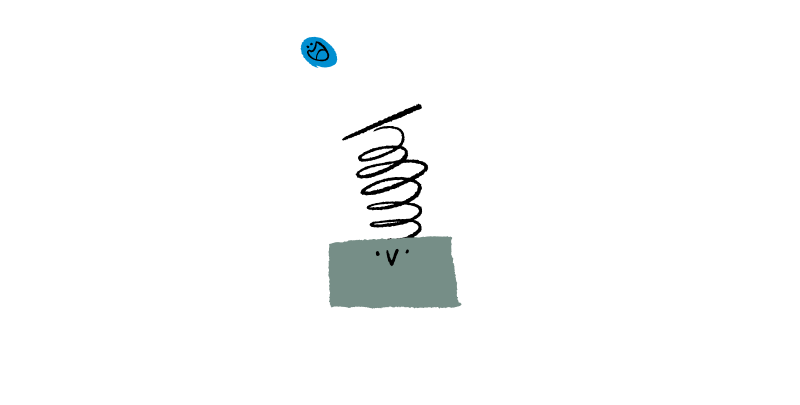
Dancing with that tension, holding these two opposing ideas with enough perspective and elegance to help us move forward, that’s the key. After all, it is tension that holds a bridge together.
So it’s not about solving tension itself, but about figuring out how to use it to reach your goals.
I don’t want to abuse metaphors here but I will: Tension is what makes a slingshot throw the farthest. Humans need the challenge of conflicting problems to spark creative solutions. Tensions (and constraints) can be the mother of invention too.
Platitudes aside, Marketing for B2B companies is its own kind of game. The rules are different. Most of the time you don’t have direct control over the experience your end customers have. You have a whole layer of companies between your product and the people buying it. I spy tension.
Therefore, your success will largely rely on your ability to train and empower your dealers or distributors. Yes, storytelling still matters. And the four Ps still stand. But “the work” is built around people; your relationships with people, and their relationship with your brand. Tech can make it easier, but will never replace it. Tension, checked.
Selling is, to a great extent, helping our ecosystem manage these tensions.
Change almost always starts at the edges and moves toward the center.
Seth GodinManaging websites implies a lot of choices. What, when, how. Picking the price, the discount, choosing the right words to spark interest, to trigger action.
It’s all about choices. The internet is rich with information about those choices, too. Recipes. Edges that make you different. And yet, the right choice for your brand is usually fluttering amidst vibrant tensions.
Some familiar examples: Would you choose an edge, or a mix?
The edges are there to teach us how far we can go, not to be chosen as a destination. They give us range and perspective.
Successful brands use these tensions, from edge to edge, as strings. Our job as planners, decision-makers, architects or creatives is to tune all the strings, all the time. Have an adventurous mindset. Try out many things and have a clear criteria to measure success. Make the proper decision to solve each specific problem.
I spend a good chunk of my day on LinkedIn. I have a fantastic network of very successful professionals. Yet, I often come across posts with a Pratfall effect confession, that usually ends with a twist that turns a “Hey, I suck at this” story into “Hey, here’s how I overcame my state of sucking at this”. Humbleness, but not too much.
So what I see every day is a collection of perfect-everything-now, including recipes for cloning the success, and invitations to “steal” the hacks.
Culture.
Bodies.
Ads.
Financial statements.
Reputation.
Strategies.
Oh my.
Perhaps everybody is perfect. Or perhaps that’s just what works on social networks. What convinces LinkedIn that your post will release more dopamine than cortisol.
There’s the small noisy bunch of perfect self residual images of success, and then there’s you and me. Most of us struggle. We dwell in tension. In-tention. We second guess, experiment, try, and fail to celebrate when something actually works. It’s challenging, exhausting, profoundly interesting, fun, and sometimes, profitable.
We revere the ability to hold two opposing ideas, to find the balance in this game of solipsist funambulism that’s growing a business. Because the tightrope makes the acrobat.
That, in a nutshell, is the goal of these letters. To bring you contradiction – and also our 0.02$ to inhabit it safely. Our Catch42.
Here’s to remaining in tension forever. Like a bridge over troubled water.

Neglect the bots and your business becomes invisible, like the proverbial tree that falls in the forest but no one hears.
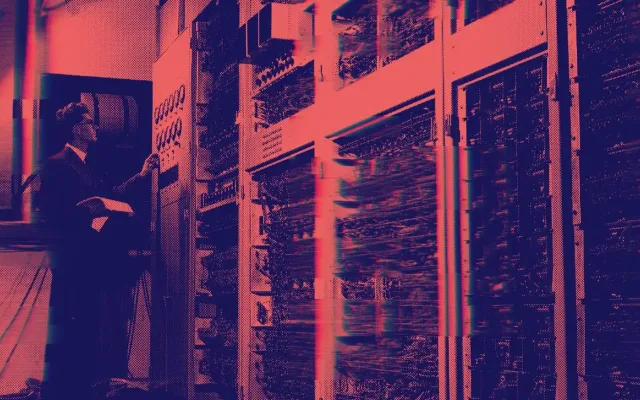
Every transaction is a conversation, and digital transformation is less about trends and more about answering the right questions.
The term implies we can decide to change through tech. It’s actually the opposite. Digital transformation is a practice, and it's never complete.

AI is forcing marketers to work smarter. Learn how to optimize for robots without losing your audience and why small efforts now mean big wins later.

