



Ecommerce
Websites vs Dinosaurs
Standing still isn’t a strategy. Optimize your website, embrace growth opportunities before it’s too late, and outrun dinosaurs.
Ecommerce redesign is risky, subjective, and often ends in compromises that exhaust everyone but please no one. Fear not. Instead of setting yourself up for trouble, use these tips to embrace your groundhog day, explore healthier ways to revamp, and eat pizzaburgers.
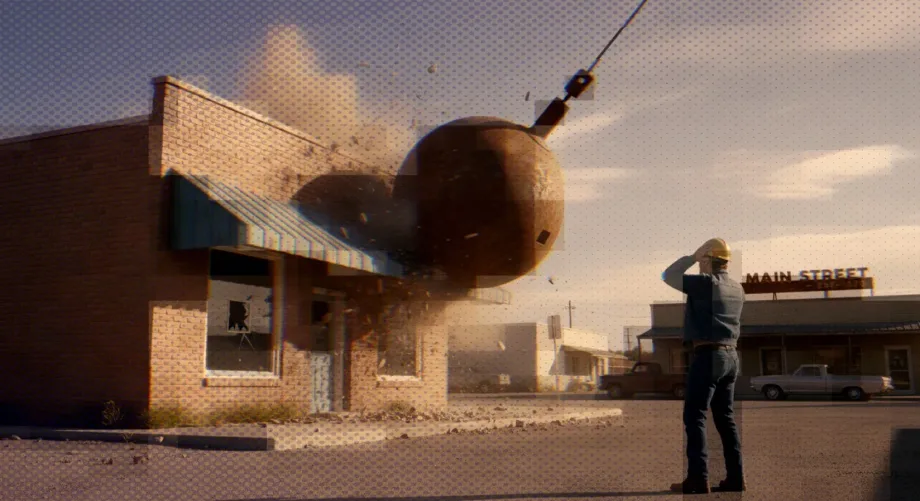
Have you ever gone through a botched eCommerce redesign project that made you fully reconsider your entire life choices, with a growing, unshakable feeling that your life somehow just took a strange turn, bringing you to the verge of an epiphany as you yawp to the sky – frantically flailing arms in the air – that you don’t want to deal with whatever-the-tech-websites-are ever again, and just unquestionably need to abandon modern society for good, spending your analogue days hunting your own food in the middle of the farthest forest, and your analogue nights fighting recurring nightmares of scope creep, missed deadlines, blood-thirsty budget spreadsheets and sheer despair?
Yeah, me too.
Redesigns take a toll on all teams and are always risky. Let’s explore the most common ones and suggest a better approach.
What’s in a name? That which we call a rose by any other name would smell as sweet.
William ShakespeareLet’s set some common ground on what we’re talking about. I’d define redesign as altering the look and feel of multiple sections, components and user experience patterns on a given website at the same time.
Achieving this takes a lot of work and moving parts. Depending on your team skills and size you might do this in-house, or through single or multiple partners. A pretty standard process would involve:
That looks like a lot of stuff for what you really want in the end, which is to make it better and sell more. And the more plates you have spinning, the more chances of things getting out of control.
The actual, visual redesign stage of the project is where the danger lurks.
It makes sense, because a lot of opinions clash there. You get three moodboards or early comps with different approaches, and it turns out that Marketing loves version A, the founders are sold on B, and you want to push for C. The more stakeholders are involved, the more it becomes an impossible design-by-committee negotiation.
So you search for consensus. But consensus sucks.
Team A wants pizza. Team B burgers. We want to move this forward so we look for the middle ground. The mathematical middle point that can swing the votes: The Pizzaburger. Converging on a compromise that, because it tries to please everyone, ends up pleasing no one.
By the time we finish dealing with this, we have brilliantly accomplished the hardest task: to make everyone unhappy. Hey, but at least we have an approved design and can move forward.
Phil: Do you ever have déjà vu, Mrs. Lancaster?
Mrs. Lancaster: I don’t think so, but I could check with the kitchen.
Groundhog DayAwfully designed websites can sell a gazillion products per minute. Amazon was the ugliest website in the world for twenty years. I love design in general (madly), and digital design in particular. It’s been at the core of everything I’ve done for nearly twenty years. So what’s the point?
The point is that we can look at this from a completely different angle.
Design is essential. Beauty matters. The problem is not redesigning or not.
It’s biting off more than we can chew.

It’s a recipe for disaster. Replatforms have their unique set of challenges around performance, SEO, data integrity and migrations, ERP integrations, you name it. Put a highly opinionated redesign layer on top and you’ll be setting yourself up for trouble.
Instead of redesigning once every n years to catch up with tech, features, design, competitors and whatnot, get everyone sold on a different way of working: redesigning just a little bit, all the time, forever.
Key advantages:
Time to market is minimum
Look, sometimes you can’t avoid a full, ambitious eCommerce redesign. We’ve had our fair share of projects where we had to revamp legacy websites with very ugly, outdated, indecipherable visual architectures. There will be cases when it’s easier (and plain logical) to throw the baby out and the bathwater. Just keep in mind to make sure the replacement is a minimum viable website, the very basic expression of what a functional improvement can look like.
Once your new website is live, working, and with no humans harmed during the process, you can begin the growth-driven design journey.
Have an ongoing, growing list of new ideas. Don’t even evaluate if these are good or bad. Just make sure you round up everything you stumble upon that looks like it could be interesting for your brand: your competitor’s new and flashy gallery style, that super easy bundle “buy the look” one click process you saw while shopping for the holidays, a third party platform that could solve fulfillment issues and needs further research.
Having this list forces you to prioritize, find quick wins, plan your time to market and arrange experiments.
Not to blow our own trumpet, but Agency Partners can be a great help. Teams outside your organization bring fresh ideas that come from a very different place, experience and skill sets.
As you go through the list, one mini-project at a time, keep a goal driven, pragmatic spirit.
Design is important, but metrics are important-er. And many times they collide. What’s essential is to understand that any change you make on your website should lead to an improvement in meaningful metrics. Look for edges in session times, engagement, actual orders and conversions, average ticket value, improvements in customer lifetime value, etc.
Make sure you split-test everything you can. Yes, that new header looks lovely, but is it better than the previous one? Just run them both in parallel and get objective data.
This is of course bound, but not limited to, conversion rate optimization. Have a calendar to set up the experiments, follow up on the gathered data, and evaluate the results.
We’re big fans of having strong opinions loosely held. Go with that hunch that tells you to completely revolutionize the product detail page. Test it against the current one. And then defend the data with fervor. Is the old layout better for the business? Just revert the changes. You were right and the new design rocks? Print “I told ya” t‑shirts for everyone and have a party.
Again, nobody really cares, so you can try bold changes in small doses and you can reverse changes if the data is looking thin. So be creative, find uniqueness in your style and don’t just copy your competitor’s site. You can break things, get away with crazy ideas, and generate happy accidents all the time.
Differentiation is the hardest challenge in B2B and having the right creative spirit helps a lot.
And defend it. I promise it’s better to continuously improve the website in small chunks than to do a crazy major eCommerce redesign every four years. It’s cheaper, improves sales and reduces the team’s time investment.
So make sure you have a decent budget to go through these improvements week after week with the right cadence and predictable effort.
Rita: This day was perfect. You couldn’t have planned a day like this.
Phil: Well, you can. It just takes an awful lot of work.
Groundhog DayAdopting an iterative approach, or “growth-driven” as we call it, is better on every front. Run it for a couple years and you’ll find faster time to market, data-driven decision making, improvements in every KPI, and a more predictable budget.
On the flipside it means you have to accept a different reality:
Websites never are, and never will be, “finished” or “redesigned”. The most brilliant brands out there are the ones with a perfectly synchronized team behind that’s trying out new ideas every day, changing fast, gathering data and finding competitive edges.
And it’s more fun, and challenging in healthier ways.
That’s it. No more eCommerce redesign. Try it out. I’m sure you’ll call me in three months, quoting Paul, to tell me we have to admit it’s getting better.

Standing still isn’t a strategy. Optimize your website, embrace growth opportunities before it’s too late, and outrun dinosaurs.

We can’t control the future, but we can adapt as we go. The key is rowing harder, adjusting course, and embracing uncertainty.

A few pointers to choose focus for your eCommerce with tips to weather the storm, make the most of everything and leverage opportunities.

Discover the hidden costs of inaction to drive ecommerce growth and learn how to discern when the pain of same overweighs the pain of change.


