



Ecommerce
Websites vs Dinosaurs
Standing still isn’t a strategy. Optimize your website, embrace growth opportunities before it’s too late, and outrun dinosaurs.
Fear drives decisions. There’s FOMO, FOMU(fear of messing up), FOBO(fear of better options), and even FOMOMO(fear of the mystery of missing out). But fear can also paralyze growth. In eCommerce, knowing when inaction hurts more than action is key.

The Internet loves acronyms, and there are so many fear-inspired catchy ones for your amusement for a reason: Fear is one of the most powerful drivers in a decision process.
And yet, paraphrasing the old and wise one, fear is the path to the dark side of Ecommerce growth.
Sometimes, it fosters bad decisions. A lot of times it leads to simply doing nothing. The numbers are shocking: 40 – 60% of the buying cycles in B2B end up with no decision. Zero. Zilch. Nada.
Is it the result of a thoughtful decision?
Or a symptom that there’s not enough data to make an informed, confident choice?
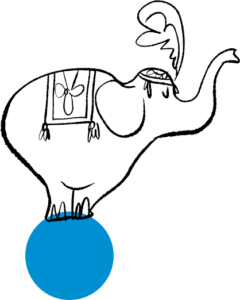
Inaction is an invisible elephant that can cost time and money. It’s paramount to make sure we can tell the difference.
“40 – 60% of B2B Opportunities end in no decision and involve ~11 customer stakeholders”
Jen Allen-Knuth (DemandJen)
This happens to all of us, as vendors and as buyers.
Not deciding is simpler: less internal politics, fewer risks, budget plans, and learning curves, and above all, no difficult conversations to negotiate stakeholder alignment.
We have a handy framework of questions to help you avoid analysis paralysis and run a serious discussion on whether or not you need to shake things on your B2B Ecommerce, and if so, how much.
Perhaps you meet a brilliant salesperson that shows you the next big piece of software.
Or you start getting complaints from customers who have a poor online experience.
Perhaps your growth plans seem hard to achieve on your current tech structure.
Or you’ve been disappointed by a certain provider and just want to start clean.
Whatever it is, it triggers (sometimes passionate) opinions on which way to go forward, and creates an itch that soon drains time, money, and everyone’s energy.
To get the right answers we need some second order thinking.
To formulate the right questions, just follow this list. 😉
We love this one. It often leads to very different answers. Your customer care team probably has a strong opinion about it. Certain issues are marginal — only a fraction of your customers experience them — but they feel unacceptable. Other bugs or inconveniences are subtle, but really get under your skin.
Open up the conversation and see what leadership, team, partners or customers have to say about your website. How many problems can you list? How often are they annoying enough that you feel like starting over?
First, make a thorough list of everything mentioned in the first question.
Then, look for sentiment and framing. “Sometimes I have issues at checkout” is not as bad as “I lost a big order before Black Friday”. List all the words that feel particularly strong.
Finally, dig deeper into the answers and run a root cause analysis backwards. Just keep asking why until you reach a culprit (the Fishbone diagram can provide a helpful structure for this).
As you go through this process, patterns will clearly emerge. Do we really have a problem with technology or user experience? Or is it a matter of internal processes, market, shared expectations, narrative, training, or something else?
If you conclude there is indeed a problem, figure out if you’re really determined to solve it. The cost of keeping the status quo is not always quantifiable, so focus on the answer purely from a subjective, perceived vantage point (we’ll talk about numbers later).
How much is the pain of same worth compared to the idea of the pain of change?
“Do not remove a fence until you know why it was put up in the first place.”
G.K. Chesterton
Now that you know whether the perception of the issue is strong enough, and have identified the underlying problems (tech, experience, operations, etc), let’s see why there’s a fence in the first place.
What are the key past actions (or inactions) that led to this?
Understanding the forces that shaped the current outcome lets you look for a new solution that tackles these problems early and strongly, and avoids repeating the same patterns.
This is the easy part. Numbers never show the full picture, but they rarely lie. The three-step objective research goes like this:
This is actually quantifiable. Tools like Noibu can gather data from your website and return a pretty accurate figure of how much revenue you’re losing for missing the mark on performance, user experience, bug fixing and more. Agencies like ours can provide useful industry benchmarks so you can draw comparisons. Find the tool and wait for the cold results.
Defining what you’re willing to invest to change the way things are for the better gives you the right boundaries to look for solutions that make sense, and discard bad fits. Projects within budget with clear expectations are 1642% less stressful (we made up the math but we’re sure it’s somewhere in the area).
TCO is the sum of everything you need to run your Ecommerce business. Calculating this essential metric is a must to analyze whether or not your current architecture makes sense, and whether there are better options out there. It includes:
For the sake of simplicity, avoid any other operational, logistical or product related costs. We’re strictly talking about any costs directly tied to the activity of selling your catalog online.
The standard TCO calculation suggests going back five years to do the math. We suggest three. Ecommerce is way too dynamic, and adding more time will make the process more complicated and the conclusions misleading.

Lay everything on the table: gut feelings, motivations, a yearning for change, money, customer expectations, plans for the future. From the intersection of these ingredients mixed with the gathered data and metrics a decision will emerge, one your team can stand behind to overcome fear-driven inaction.
If, at the end of this process, you can’t clearly articulate an answer to these questions, it’s simply because what you have works. Sure, there’s always room for improvement, but it’s perfectly safe to conclude you don’t need a “road to Damascus” moment.
Just remember: a purely objective decision is not possible; an informed one is mandatory.

Standing still isn’t a strategy. Optimize your website, embrace growth opportunities before it’s too late, and outrun dinosaurs.

We can’t control the future, but we can adapt as we go. The key is rowing harder, adjusting course, and embracing uncertainty.

A few pointers to choose focus for your eCommerce with tips to weather the storm, make the most of everything and leverage opportunities.
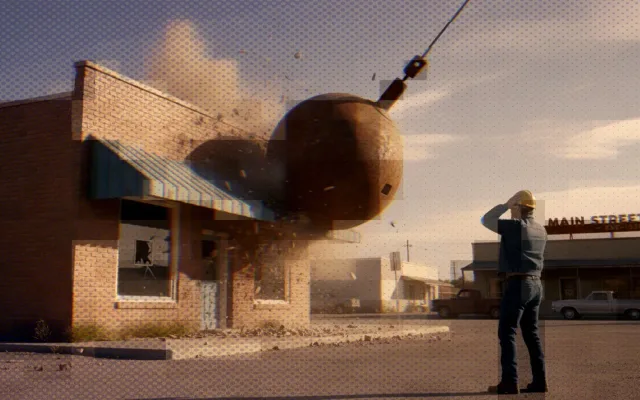
Ecommerce redesign is risky, subjective, and often ends in compromises that exhaust everyone but please no one. Fear not. There's a better way.


