



Marketing
The Attract Framework
Neglect the bots and your business becomes invisible, like the proverbial tree that falls in the forest but no one hears.
In our last 2024 issue, we asked readers to vote what they wanted to read about this year, and “digital transformation” came on top (quite comfortably above the second favorite, customer experience).
This response made us take a step back and ponder upon the concept of “digital transformation”. Is there a unique way to tackle this big, broad, vague subject? Do we have a shared understanding of what it means, involves or requires?
The answer is simply “no”, because we all tend to categorize distinct concerns about our company’s immediate future into this idea of transformation. Turning an undefined, subjective matter into something useful we can all apply to our business requires some reframing.
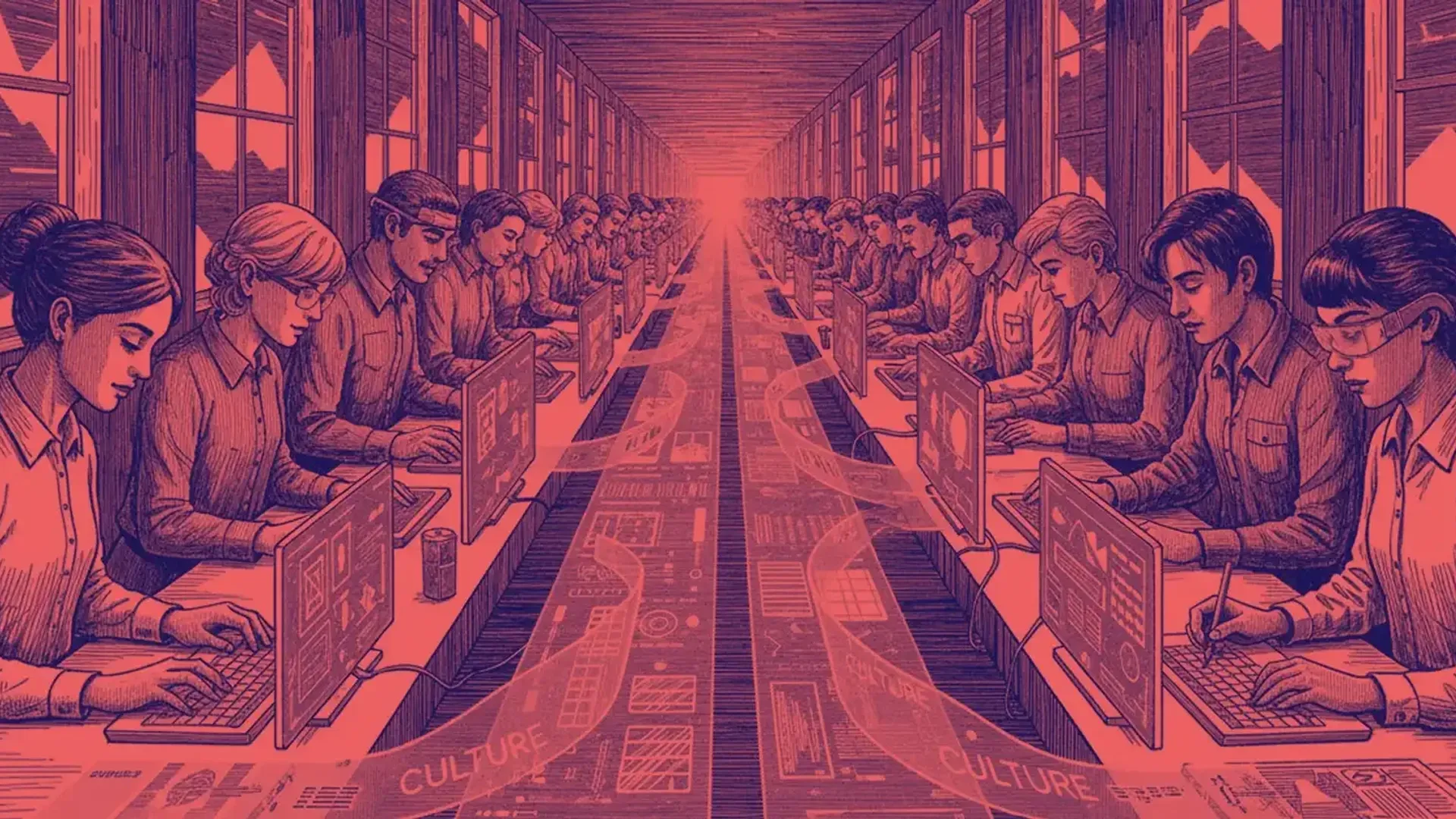
David Bowie was arguably the most influential musician of the 20th century. A quick glimpse into his career will undoubtedly show his uncanny ability to transform, adapt, explore and trailblaze.
There’s one particular chapter in his career that’s less known by people outside of his fan circle. He conceived, financed and led an Internet Service Provider called, of course, BowieNet. Back in 1998, the Thin White Duke released a paid service for dial-up internet. You know, the kind that you paid monthly to connect your old screeching modem to the vast, unexplored, rebellious and free World Wide Web. For $19.90 a month you got a service similar to what AOL could get, plus:
It was a predecessor for SecondLife, WoW or, of course, the extravagant and useless Metaverse. BowieNet laid foundations for art, media and entertainment services like Spotify or Netflix. It gave fans unique virtual identities (skins) and nexus that inspired future pop and gaming culture from The Sims to Fortnite. It also pre-dated 1:1 artist and fanbase conversations that we might see on today’s social networks from Instagram to Onlyfans. And it established superb, highly codified branding that went way beyond artistic output.
BowieNet was a groundbreaking endeavor that innovated at many levels. It never scaled beyond a niche experiment and wasn’t commercially successful. Innovation doesn’t always pay off.
Being ahead of your time can suck just as much as lagging behind.
In a wonderful 1999 interview with BBC’s Jeremy Paxman, the man who fell to earth shared his vision of what the future would bring in the interplay of technology and art:
An art piece is not finished until the audience comes to it and adds their own interpretation. What the piece is about is the gray space in the middle, that gray space is what the next century is about.
Digital transformation is nothing, and it’s everything. It’s building that gray space in the middle. It’s adopting technology so it operates upon reality, creating the right gaps for our customers to fill and letting them define what our brand actually is.
Let’s bring this down to earth. Digital transformation is NOT about:
Instead, it’s about an operational mindset.
We shape our tools, and thereafter our tools shape us.
Marshall McLuhan (via John Culkin)I’d like to delve deeper into an idea I believe should impact the way we manage technology and branding. We move backwards into the future. As new tech is created, it starts to effect change, operating into reality, and more importantly, into identity. It alters the way we understand ourselves, how we relate to each other. Our consumption habits. Our idea of what work is. The values, benefits, rationals and irrationals behind our choices.
We can never really see those changes happening. We merely measure the results as a given fact. Think of how different the world feels now, compared to ten years ago. How many bold expert predictions did you come across that were utterly wrong?
What we perceive as “the future” is, in fact, the latest snapshot of our most recent past. We live reality through a rear-view mirror. The most we can do to benefit our organizations, strategy and operations is to understand our context, mediums, messages and the interplay of those spaces. Allow me to expand on that in the next chapter, two weeks from now.
The term “digital transformation” implies that we can decide to change through tech. It’s actually the opposite. As tech evolves, we’re constantly changing, and so are our customers, our culture, practices, processes and potential. It is you who is being “digitally transformed” all the time.
It’s no longer a game of catch-up. It’s a practice. And like any work of art, it’s never complete.
We should obsess less about the tools, and more about what we want to achieve, when, and what we’re willing to do to get there. We’re always starting and restarting. Keep calm and embrace the ch-ch-ch-ch-changes.
Efficiency and Optimization, two beloved words for managers everywhere, are a byproduct of strategy, vision and execution. They are tools, not goals. Understand the space connecting you and your audience before figuring out which technology will create the best bridge.
Just a few pointers.
For help making plans and setting priorities, check out our Blueprint service.

Neglect the bots and your business becomes invisible, like the proverbial tree that falls in the forest but no one hears.
Every transaction is a conversation, and digital transformation is less about trends and more about answering the right questions.

AI is forcing marketers to work smarter. Learn how to optimize for robots without losing your audience and why small efforts now mean big wins later.
Standing still isn’t a strategy. Optimize your website, embrace growth opportunities before it’s too late, and outrun dinosaurs.


