
 BenchMark Corporate


Unlike diamonds, ecommerce migrations are not forever. Here are some principles to consider the next time you have to face an Ecommerce replatforming.
Migrating ecommerce platforms is a f***ing nightmare
Wait, what? I thought this was an article about ecommerce platforms. What does it have to do with migrations?
Whether you are doing your homework and research to pick a platform or you already have an existing ecommerce business and want to examine other options, we must give you a word of caution. Whatever decision you make, you cannot ignore the objective, proven fact that eCommerce platform migration is almost inevitably painful, on multiple levels.
Most Enterprise CEOs would rather gnaw off their arm than replatform.
Fear not. In this post, we will cover the best ecommerce platforms depending on the type of business, budget, priorities and needs to help you get it right the first time and spare yourself the ordeal. From our own experience and our biased vantage point, that is. We’re just human.

Ecommerce platforms play a crucial role in facilitating online transactions between businesses and customers. You could say they’re the place where those transactions “happen”and their infrastructure. With the rise of e‑commerce, these platforms have become essential for businesses of all sizes, and key to reaching audiences and streamlining operations.
Put simply, an ecommerce platform is a software or online tool that allows businesses to create and manage their online store. It provides a platform for selling products and services online, making it easier for businesses to reach a wider audience and increase their sales. These platforms come with a variety of features that make it easier for businesses to set up and manage their online store, from creating product listings to processing payments and managing inventory.
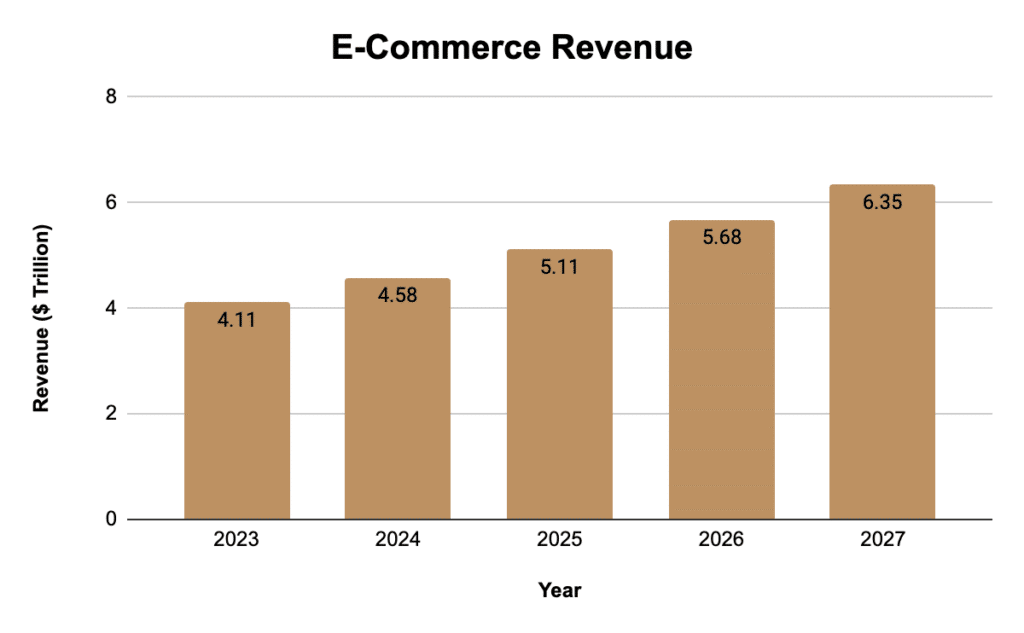
The importance of ecommerce platforms for businesses cannot be overstated. The global ecommerce market is expected to reach $6.35 trillion by 2027. Running an ecommerce site is quite clearly a must.
But as we said earlier, what’s even more important than having an ecommerce platform is choosing the right one, and hopefully, doing it before going all in, getting the devs to customize your site and loading up your products only to realize it runs super slow or learning you need to spend some extra hundreds a month to keep your inventory in sync, or keep your site secure and your information (and your clients’ information) safe.
So, without further ado, here are the different types of ecommerce platforms available, each with its own set of features and options. We’ll cover the particulars and you can decide which type is best for your business depending on your specific needs and budget.
Let’s take a closer look at the different types of ecommerce platforms and what sets them apart.
Open source platforms are free to install and open to the public, meaning anyone can access and modify the source code. This type of platform is highly customizable, giving businesses the flexibility to tailor their online store to their specific needs. Some popular open source platforms include Magento, WooCommerce, and PrestaShop.
These platforms stand as champions of flexibility and customization. They offer businesses the freedom to access and modify the source code, tailoring their online store to specific needs.
But that comes at a price (although open source platforms are technically free to use). Open source platforms demand technical expertise for customization. That means a strong Dev team and many hours. The community-driven support and a large pool of developers contribute to their growth and provide a valuable resource for businesses but still, the customization journey can be time-consuming, and security risks loom. Open source platforms save you a significant amount of money on licensing fees. But they are not free.
Software-as-a-Service eCommerce platforms, or licensed platforms, are cloud based solutions operating under a recurring fee model. Users pay a fee to access and use the platform, but the code and infrastructure remain the property of the platform provider. Examples of SaaS eCommerce platforms include Shopify and enterprise solutions offered by Adobe, Salesforce, Oracle, and SAP.
This model provides businesses with a convenient and hassle-free way to set up and run their online stores, as the platform handles much of the backend infrastructure and maintenance.
These platforms are managed by the provider, meaning you don’t have to worry about maintaining servers or handling technical aspects. The provider takes care of everything, from security to updates and maintenance in exchange of a monthly or yearly subscription fee to use the platform. This makes it a great option for businesses that don’t have a dedicated IT team or technical expertise. It’s also good if you need to get your site up and running quickly.
Most of these platforms offer user-friendly website builders, making it easy for businesses to create their online store without any coding knowledge. They also come with a variety of customizable templates and themes, allowing businesses to create a unique and professional-looking store.
However, SaaS platforms have limited customization options compared to open source platforms. Businesses may also face restrictions on the number of products they can sell or the payment gateways they can use. Moreover, as businesses grow, the monthly or yearly subscription fees can become more expensive.
Open SaaS platforms combine the benefits of both open source and SaaS platforms. They provide an open-source codebase, allowing businesses to modify their platform, while also offering hosted software as a service. These platforms offer the flexibility and customization options of open source platforms, while also providing the ease of use and managed services of SaaS platforms. Our favorite example is BigCommerce.
One of the main advantages of Open SaaS platforms is their scalability. They can handle high volumes of traffic and sales, making them suitable for growing businesses. Additionally, they offer a wide range of customization options, allowing businesses to create a unique and personalized online store.
However, Open SaaS platforms can be more expensive than both open source and SaaS platforms. They also require technical expertise to set up and manage, whether in house or through an agency. It may be a problem for smaller businesses on a tighter budget, but hiring an eCommerce agency can actually be a very good idea.
This type of ecommerce platform allows businesses to sell their products on existing marketplaces, such as Amazon, eBay or Etsy. These platforms are known for their large customer base and streamlined selling process.
They provide businesses with a ready-made audience and the infrastructure to sell their products, making it an attractive option for those looking to reach a larger customer base. One of the main advantages of marketplace platforms is the built-in audience and established trust that comes with selling on a well-known marketplace. Businesses also benefit from the marketplace’s infrastructure, such as payment processing and shipping options. However, marketplace platforms come with their own set of limitations and fees. Businesses may have to pay a commission on each sale and may not have as much control over their branding and customer experience. It’s also important to note that businesses are competing with other sellers on the same marketplace, which can make it harder to stand out and build a loyal customer base.
In today’s digital age, ecommerce has become an essential aspect of business operations. From retail giants to small businesses, most companies have an online presence to reach a wider audience and increase sales. There are two main eCommerce business models, differing mostly in the parties involved and the type of transactions: B2C and B2B.
B2B stands for business-to-business, meaning that a company sells goods or services to another company. This model typically involves larger orders, longer term contracts and longer sales cycles. Moreover, B2B transactions often involve negotiated contracts and pricing, and require specialized knowledge or expertise.
B2C, on the other hand, stands for business-to-consumer and, as the name reveals, involves selling products or services directly to individual consumers. B2C transactions tend to be smaller in scale but much more frequent, and generally, more impulse-driven and more demanding in terms of UX, which is increasingly important in B2B eCommerce anyway, because B2B users are individuals too.
Read more about B2B and B2C here
It could be argued, and we often have, that ultimately, all ecommerce is B2P (Business to People) but there are specific issues for B2B merchants that require ecommerce platforms specifically designed to cater to the unique needs of businesses selling products or services to other businesses. Tailored to facilitate the complexities of wholesale, bulk, and enterprise-level transactions, they go beyond the typical features of business-to-consumer (B2C) platforms, providing functionalities that specifically address B2B requirements. These include:
B2B transactions often involve negotiated pricing, volume discounts, and contract pricing. B2B platforms provide features that enable businesses to offer individualized prices based on customer segments, contract terms, or order quantities.
B2B platforms allow businesses to manage extensive product catalogs, including variations, attributes, and hierarchical structures. These platforms also have advanced inventory management features to account for large and fluctuating stock levels.
B2B transactions typically involve large quantities and complex order processes. B2B ecommerce platforms streamline the ordering experience by allowing businesses to place orders in bulk, upload spreadsheets, or integrate with their enterprise resource planning (ERP) systems.
B2B platforms provide robust customer management capabilities, allowing businesses to manage customer accounts, assign user roles, and set permission levels. This ensures a personalized and secure experience for each business customer.
Do wholesalers, distributors and manufacturers need different functionalities?
Most certainly yes.
Distributors will need customized pricing, account login, and net terms for almost all their customers, because they are the connection between manufacturers and wholesalers. The same will apply to some manufacturers who need to hide B2B pricing for their consumer products, making it visible only through account login.
Although wholesalers who sell directly to retailers will need these features too, they also need to offer one-off purchases, so they will need features like volume pricing and guest checkout too. Some manufacturers may need businesses to submit files to get the right product, and several options per product, not just a SKU.
The ideal B2B platform should be able to give to each their own, and it shouldn’t be a nightmare.
Check out our FAQs on B2B eCommerce platforms for more on this.
Not all ecommerce platforms are created equal. And not all of them have the features and capabilities required by merchants to meet the intricate demands of their B2B and Hybrid businesses. Here are a few that do.
The masterminds behind Magento focused on the B2B eCommerce market and developed an open-source, modular platform tailored specifically for B2B businesses using the Symfony framework.
OroCommerce boasts a wide range of B2B marketplace and digital commerce features that come ready-to-use, such as personalization, localization, an advanced pricing engine with customer-specific pricing, workflow automation, customer retention tools, and integration with OroCRM. These features are designed to cater to the unique needs of B2B merchants, making it a promising option for businesses looking to expand their online presence.
It may be a better fit for larger, more technically-savvy businesses, while smaller companies may find it more challenging to fully utilize its capabilities. Nonetheless, with its experienced founders and targeted features, OroCommerce is certainly a platform to watch in the B2B eCommerce space.
VTEX is a cloud-based commerce platform geared towards medium to large enterprises founded in Brazil in 1999. A key player in the MACH alliance, it’s flexible and scalable to accommodate increased traffic and expanded catalogs and offers robust order management features, which is ideal for businesses with complex needs, as is the case of B2B companies.
However, the learning curve may be steep. Implementing VTEX may require some learning, especially for businesses new to omnichannel strategies.
Our favorite choice, BigCommerce offers a B2B edition that provides features specifically designed for wholesale and enterprise-level businesses. This includes functionalities such as customer groups, custom pricing and discounts and sales rep masquerade.
You’re free to scale your business to new heights without being limited by clunky technology or outdated software. Your online shopping experiences are future-proof, so you can adapt to any technological disruption that may come your way. Moreover, you can create highly personalized front-end experiences on multiple channels, giving your customers the shopping experience they deserve. Last, but not least, you get the flexibility to expand into new territories, languages, and currencies. Your business growth is only limited by your ability to scale. The sky’s the limit and the bottom line is yours.
IDC MarketScape recognizes OroCommerce, VTEX and BigCommerce as leaders in B2B Digital Commerce. However, after shifting its focus to midmarket and enterprise companies, Shopify came to hold a significant position in the market, catering to businesses of all sizes, from startups to big enterprises, including B2B companies.
Shopify Plus is renowned for its scalability and customization, providing an adaptable ecosystem for B2B ventures. It offers features like custom pricing, bulk ordering, and seamless integrations with tools such as NetSuite and Salesforce. The downside?
Most of these are not native features. Merchants selling in multiple currencies can set fixed pricing for different markets or use custom rounding rules, but they can only do this if using Shopify Payments.
Also, merchants on Shopify can only have a single automatic discount applied at a time. Moreover, Shopify doesn’t support a large volume of API calls per second. This is a problem because enterprise brands have a lot of different systems they rely on (ERP, OMS, PIM, etc.) and keeping everything current can have a huge impact on the experience of the end consumer.
This becomes problematic for large amounts of data and impacts performance. Shopify relies heavily on its app store to fill gaps in its core functionality, which can lead to slower store performance as more third-party apps and scripts are added, and it may become harder to control and manage store performance.
Finally, Shopify cannot support different catalogs / storefronts in a single instance (MSF) or BOPIS, local delivery, accelerated checkouts (buy now pay later or digital wallets).
Syncing a product catalog with 25,000 SKUs would take over 2 hours on Shopify Plus (limited to 10 calls per second) compared to a minute on BigCommerce (400 calls per second).
Read more about Shopify issues
If you want to know more reasons why industry analysts like Gartner and Forrester do not evaluate Shopify for B2B, check out this post:
Read more about how Shopify compares to other B2B eCommerce platforms.
B2C (Business-to-Consumer) ecommerce refers to the process of selling products or services directly to consumers online. It differs from B2B (Business-to-Business) ecommerce, which involves transactions between businesses. B2C ecommerce platforms are designed to provide a smooth and efficient shopping experience, ensuring that consumers can easily browse, select, and purchase products.
There are many ecommerce platforms and their suitability for B2C ecommerce depends on the specific needs and resources of the business. Here’s a list of some popular ones.
Shopify: Easy to use, ideal for a wide range of industries. However, it can be expensive due to transaction fees and costs of third-party apps.
WooCommerce: Offers great customization and is integrated with WordPress. The drawback is the need for self-managing hosting and security.
BigCommerce: Known for scalability and built-in features, but limited in theme customization and has sales limits on plans.
Adobe Commerce (Magento): Highly customizable and scalable, but has a steep learning curve and may not be cost-effective for small businesses.
Shopify Plus: Offers advanced features for large businesses, but is quite costly and may be excessive for smaller operations.
Salesforce Commerce for B2C: Excellent for customer relationship management but complex to set up and generally more expensive, making it less suitable for small to medium businesses.
There’s B2B, B2C and a blend of both, known as Hybrid Commerce, or B2B2C.
There’s a third model. B2B2C stands for “business-to-business-to-consumer”. This combines both B2B and B2C processes and strategies, offering companies more flexibility to expand and access new markets, and offering consumers more choice and convenience. An intermediary business facilitates the sale of products or services between the B2B business and individual consumers, like a relay race of sorts, one company passing the baton to another that takes it to the consumer, at the finish line.
Learn about other key eCommerce terms here
Essentially, hybrid commerce demands an eCommerce platform that is versatile, agile, and capable of unifying various aspects of both digital and physical retail.
Customers expect to switch between online and offline channels without any friction, so a good Hybrid ecommerce platform must provide the technological backbone that allows customers to interact with a brand across different channels while ensuring a consistent, unified shopping experience.
Moreover, eCommerce platforms in hybrid commerce setups must efficiently handle and integrate data from diverse sources – from in-store purchases to online interactions. This data integration is key to understanding customer behavior, personalizing experiences, and making informed business decisions.
Hybrid commerce requires platforms that can scale and adapt to the evolving needs of both B2B and B2C processes. The platform should support a business’s growth, whether it’s adding new online channels, expanding into new markets, or integrating advanced technologies like AR and VR.
The rise of headless commerce, where the frontend (customer-facing side) is decoupled from the backend (data and processing), is pivotal in hybrid commerce. It allows businesses to customize customer experiences for each channel while maintaining a unified backend management system.
Here’s a brief outline of the main ecommerce platforms for hybrid commerce, their strengths and weaknesses.
BigCommerce is highly scalable and flexible, catering to both B2B and B2C needs with ease.
It boasts robust integrations and API capabilities, facilitating seamless operations across various channels. Renowned for its user-friendly interface, BigCommerce allows for extensive customization, which can only be good for user experience.
BigCommerce offers a variety of B2B features and add-ons you won’t find anywhere else. It makes things super easy for hybrid businesses with B2B and B2C customers, allowing them to offer different price lists and transactional options with one unified solution.
Read more about BigCommerce here
However, the platform can become more costly as you add more features and the selection of free themes is somewhat limited, potentially impacting the aesthetic appeal. Nevertheless, BigCommerce remains highly suitable for hybrid models. Its ability to manage B2B and B2C operations efficiently makes it an excellent choice for businesses seeking a platform that is robust and versatile.
Magento excels in customization and scalability, making it ideal for businesses with specific needs as is the case with B2B2C. It offers robust B2B features and multi-store capabilities, enhancing its versatility. But it requires serious technical expertise for setup and ongoing management and the total cost of ownership can be higher than that of other platforms.
WooCommerce is highly adaptable, integrating seamlessly with WordPress and particularly cost-effective, making it a great choice for small to medium-sized businesses. However, complexity can increase with the addition of plugins and extra hosting and security measures might be needed.
Salesforce is ideal for businesses requiring robust CRM integration in their hybrid commerce strategy. It certainly excels in customer data management. Advanced analytics and marketing tools are available, enhancing customer insights and engagement. The problem is the very steep learning curve and the fact that it’s almost invariably more expensive than its competitors.
Shopify is known for its user-friendly interface, making it accessible to a wide range of users.
A wide range of apps and themes are available, enhancing its appeal. But it’s not really that suitable for complex B2B needs yet.
Shopify offers the option to use a Blended Storefront for B2B& B2C on a single instance, but it cannot differentiate between a B2B customer and a B2C customer, which means discount codes, gift cards, cart notifications, shipping settings & rates apply to both B2B& B2C customers. They all have the same exact shopping experience.
Read more about potential issues with Shopify here
Also, transaction fees can surely accumulate over time, making Shopify much more suitable for straightforward B2C or small-scale B2B operations.
That’s the problem with buzzwords. They buzz. There’s another type of Hybrid Commerce, which refers to the integration of digital and physical retail channels to create a cohesive and immersive shopping experience. Hybrid commerce is the combination of online and offline (what we used to call IRL) shopping.
Businesses embracing Hybrid Commerce can benefit from enhanced customer relationships, scaling agility, and expanding their customer base because simply put, more is more. And customers find online commerce more convenient, and in-store interactions more personalized, so it’s also a win-win for them.
Of course, that convenience requires great effort and coordination behind the scenes. While Hybrid Commerce presents numerous advantages, businesses should consider potential challenges such as higher workloads and responsibilities associated with storage or taxes.
Retailers offering a consistent experience across their website, mobile app, and brick-and-mortar stores.
The Latin prefix “omni” means “everything,” and Omnichannel refers to a sales strategy that allows consumers to interact with a brand across multiple channels: website, social media, email, physical stores and more. The superpower of Omnichannel is that it allows channels to talk to each other. That is, a customer can start shopping online and finish in a physical store or research a product on the phone and then buy it from the computer – all while maintaining the same shopping cart and customer experience.
eCommerce glossary of key terms
Customers click to order online and then pick up their purchases at a physical location. Click-and-Collect, also known as BOPIS (Buy Online, Pick-up In Store), merges the convenience of online shopping with the immediacy of physical retail. It not only reduces shipping costs and wait times for customers but also drives additional foot traffic to stores. Businesses can leverage this service to upsell or cross-sell products during pickup, enhancing customer experience and increasing sales.
In-Store Technology: Modern physical stores are increasingly adopting digital tools like AR fitting rooms, QR codes for product information, mobile checkout, and interactive kiosks. These technologies not only elevate customer experience but also provide valuable data on customer preferences and behavior, which can be used for personalized marketing and inventory management
Another example of Hybrid commerce is the combination of social media browsing with instant purchasing options. Social Commerce is a rapidly growing facet of hybrid commerce. Platforms like Instagram and Facebook allow users to purchase products directly through their apps, making the shopping experience incredibly seamless. This integration of social media and e‑commerce capitalizes on the user’s social experience, tapping into impulse buys and peer recommendations.
Well, some are better at omnichannel, multichannel, BOPIS and social commerce than others.
For example, Shopify offers seamless integration with Facebook, Instagram, and other social networks, enabling businesses to sell directly through these channels. BigCommerce also supports strong social media integrations, allowing for direct sales and marketing on platforms where customers spend a significant amount of time. These platforms make it easier to leverage social media for driving sales, engaging with customers, and providing a unified shopping experience across various social channels.
BigCommerce, Shopify Plus and Adobe Commerce are good for omnichannel due to their robust integrations and scalability. These platforms provide advanced analytics, integrations with various marketplaces and social media platforms, and efficient inventory management, crucial for a successful omnichannel approach.
We know. It sounds bad, but it’s a good thing.
Headless commerce is a modern eCommerce architecture that separates the front-end (customer-facing aspect) from the back-end (product, order management, and other processes).
Unlike traditional eCommerce systems, which are monolithic, integrating all processes in one framework, Headless provides more flexibility, allowing integration of new technologies and channels without overhauling the entire system.
By decoupling front-end and back-end systems, headless commerce allows businesses to swiftly integrate new technologies and channels, as changes in one system don’t affect the other. This separation fosters innovation and quick adaptation to market trends. Really great for scalability and agility. What brings everything — all those little heads- together? APIs.
While particularly beneficial for B2B, Enterprise, larger or rapidly evolving businesses, headless commerce may be excessive for smaller companies with less complex requirements since the transition to and implementation of headless requires careful consideration of existing systems, technical expertise, and financial planning.
If you asked “What is the best eCommerce platform?” we’d have to say “It depends”. Mostly on you, what you need, and what you can do about it. That is, the specific needs of your company and the resources available to you.
What we can tell you is which are some of the leading eCommerce platforms, and which are the best platforms for specific needs and company types.
It is a well-known fact that bigger does not necessarily mean better, but in the realm of ecommerce platforms, size often equates to extensive resources and capabilities,although sometimes big things can get too complex too soon. Anyway, here are the big players in the world of ecommerce platforms.
Known for its headless commerce architecture, Commercetools is ideal for enterprises needing a flexible, API-driven approach. This platform is best suited for large-scale operations requiring customized user experiences. However, it may not be the best fit for smaller businesses due to its complexity and cost.
Adobe Commerce offers robust, customizable eCommerce solutions, ideal for businesses looking for extensive customization and control. While it excels in scalability and features, it requires a steep learning curve and significant development resources.
Salesforce Commerce Cloud is known for its CRM integration and strong focus on customer experience. It’s a great choice for enterprises with a focus on customer data and personalized shopping experiences. The main drawback is its cost, which may be prohibitive for smaller businesses.
Oracle Commerce is another big one, offering comprehensive solutions for large businesses. They provide extensive features but often come with high costs and complexity.
The significant advantage of being a large platform is the ability to offer a wide range of advanced features and integrations, catering to complex business needs. On the flip side, the potential downside is that these platforms can be overwhelming or too much to handle, and financially out of reach for smaller businesses or startups.
Popularity in eCommerce platforms often correlates with ease of use and versatility. Here are some of the most popular eCommerce platforms. You can also check user reviews on comparison sites like Capterra or G2, with authentic feedback from verified users, including insights on pricing, features, and user experience.
As a WordPress plugin, WooCommerce offers extensive customization and is popular among WordPress users. Ideal for full control over the online store but requires a good understanding of WordPress and might struggle with high-traffic websites.
Shopify is renowned for its ease of use and robust feature set, perfect for small to medium businesses. While it offers great templates and integrations, it can be limiting for highly complex customizations.
Platforms like Wix or Squarespace are also gaining traction for their user-friendly interfaces and simplicity, suitable for smaller businesses or individuals who prioritize ease of setup over extensive customization.
BigCommerce is another popular choice, known for its scalability and comprehensive built-in features. It’s suitable for a range of business sizes, and particularly for “fast-growing, experience-driven midmarket companies looking for a multi tenant SaaS B2B digital commerce platform”, according to the 2023IDC MarketScape report, which recognized BigCommerce as a Leader for its developer and business user-friendliness, flexible MACH architecture, and open SaaS ecosystem.
When you’re small, almost anything can make you or break you. eCommerce platforms are crucial for small businesses to thrive in the digital marketplace. Selecting the right platform depends on several factors including cost, ease of use, features, and scalability. Here is a brief overview of some popular choices:
WooCommerce, suitable for those familiar with WordPress, is cost-effective with a moderate learning curve. It boasts extensive customization options and a wide array of plugins, though some may add to the overall cost.
Shopify’s all-in-one solution is known for its ease of use and comprehensive features, as well as quick time to market. It offers a range of pricing options, making it suitable for different budget sizes. Shopify’s user-friendly interface and vast array of design themes make it ideal for businesses with little technical expertise.
PrestaShop is known for its powerful features, it’s a good choice for businesses looking to scale. However, it might not be as cost-effective as it seems due to additional costs for plugins and themes.
Wix offers an intuitive drag-and-drop interface, making it easy for beginners to design their websites. It’s suitable for small-scale businesses due to its simplicity and affordability.
When selecting a platform, consider not only the immediate needs but also the potential for future growth. Small is beautiful. Nothing wrong with that. But perhaps your small business is successful and grows, and that‘s when you’ll think if choosing an e‑commerce platform that only works for small businesses was such a great idea. If you run a small business the best ecommerce platform for you is one that will let you operate on your resources now, but will be able to grow as your business does. Scalability’s the word.
Specialized E‑commerce platforms cater to unique business needs and industries. Here are some examples:
Platforms like Gumroad are specifically designed for digital products. Gumroad simplifies the selling process of digital goods like e‑books, music, and software. It offers streamlined payment processing and file distribution, making it a go-to choice for creators and digital entrepreneurs.
Social E‑commerce platforms allow businesses to leverage their social network presence for sales. They provide tools for selling directly through social media platforms, enhancing customer engagement and simplifying the purchase process. Instagram integrates product discovery and purchasing directly within the platform whereas rapidly growing TikTok for Business uses its engaging format to offer product promotion and direct sales
Depending on the industry, there are other platforms tailored to specific needs like subscription services, event ticketing, or niche product sales. These platforms offer unique features like recurring billing, event management, specialized product catalogs, and industry-specific marketing tools to cater to their specific market segment.
If you operate on a specific and popular vertical with unique needs, chances are there’s a specialized platform waiting for you.
There are several aspects to consider when choosing an ecommerce platform that will not make you hate ecommerce platforms and the key, as if often the case with difficult choices, is to know what to compare. We have covered most of those aspects here. And you can also check our series where we compare BigCommerce against other popular platforms such as PrestaShop and Shopify Plus.
There are several factors that usually drive merchants to change ecommerce platforms and those are the key things to look for and compare.
In a nutshell, they can relate to three things — poor performance, poor scalability, or poor you (high or unpredictable costs) — and combinations thereof.
Read more about good reasons to replatform here
Issues such as poor customer experience, inefficient processes, difficulties in handling increased traffic, slow page load times, outdated web experiences, frequent downtime, and increased security threats are major performance red flags.
The inability of a platform to evolve with changing customer needs, such as lacking omnichannel selling options or customization flexibility, restricts a business’s growth. When the current platform cannot support the company’s expansion or becomes a roadblock rather than a facilitator, it signals the need for a more scalable solution.
Legacy platforms often entail higher operational costs, including maintenance, dedicated development resources, and the slow pace of developing new features or updates. And then there’s the unforeseeable: hidden costs associated with “free” platforms, such as maintenance costs, expensive plugins, and high-cost custom development solutions. When the current platform causes significant financial burden or resource allocation challenges, affecting the ability to innovate and develop new features timely, it’s worth considering alternative, more cost-effective platforms.
In this section, we should give you some tips and advice on how to choose the right ecommerce platform. We surely don’t believe there’s such a thing as a one size fits all when talking about ecommerce platforms, so the best ecommerce platform will be the one that best fits your specific business needs and resources. That doesn’t mean we think that all platforms are equal.
We have been BigCommerce partners since 2011, and that’s because we think it is the best platform for B2B and hybrid midmarket companies, which is the audience we mostly serve, and a very worthy choice for smaller businesses that want to go big at some point.
Learn why we consider BigCommerce the best eCommerce platform for B2B. Or schedule a call to get a demo and see for yourself.
P.S.: We did mention replatforming was a major pain. But don’t worry. If you pick a platform, and it doesn’t go well, we can help you migrate, without the migraine. No need to gnaw off your arm. Check out RevAmp, our virtually painless, 90-day eCommerce migration service.

Unlike diamonds, ecommerce migrations are not forever. Here are some principles to consider the next time you have to face an Ecommerce replatforming.

Discover the hidden costs of inaction to drive ecommerce growth and learn how to discern when the pain of same overweighs the pain of change.

While Shopify has proven itself as a giant in the industry, it's clearly not the perfect fit for every business. Here are the best Shopify alternatives,…

Which are the pros and cons of replatforming? It depends. On where you’re going to, and where you’re running from.


